
The Globally Harmonised System (GHS) 0f chemical labels began to come into force nearly 10 years ago. In Europe it was implemented by the Classification, Labelling and Packaging Regulations (CLP) and you can find people referring to either GHS or CLP – but they mean the same thing.
Chemical hazards are divided into three categories: Physical Hazards (such as flammability), Health hazards (such as toxicity) and Environmental hazards.
Each specific hazard has its own Hazard Statement eg H314: corrosive to skin and eyes or H402: harmful if swallowed.
As well as this, each container needs to have one of 9 specific hazard symbols on it, to warn you of the dangers that might lie within.
You need to know these symbols.
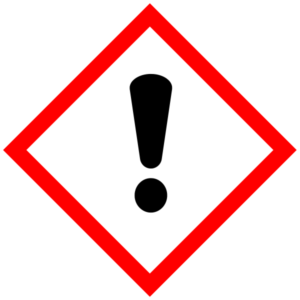 | Irritant (as opposed to corrosive) or harmful (as opposed to toxic) |
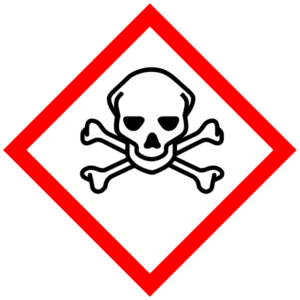 | Acute toxicity (may even be fatal but there are no lasting effects) |
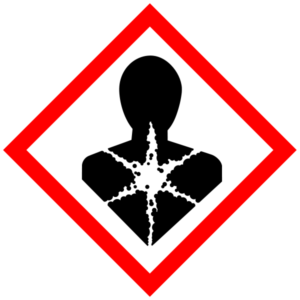 | Health hazard. This is used for various long-term health effects such as carcinogen, reproductive toxin, sensitiser, specific target organ toxin. |
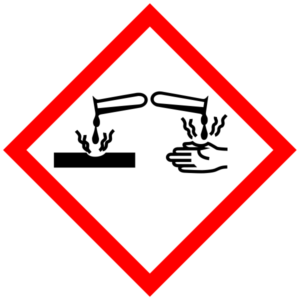 | Corrosive to skin and/or eyes. (can also be used for corrosive to metals). |
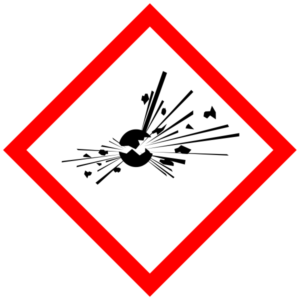 | Explosive - including various unstable substances as well as high explosives. |
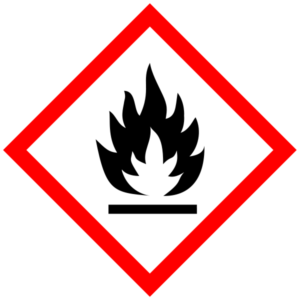 | Flammable |
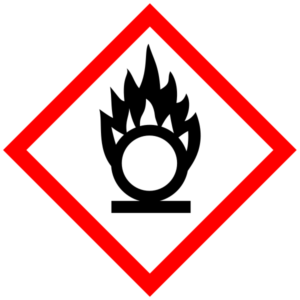 | Oxidiser |
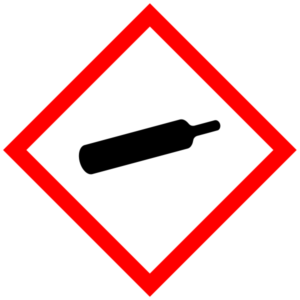 | Gases under pressure - also used for cryogenic hazards such as dry ice. |
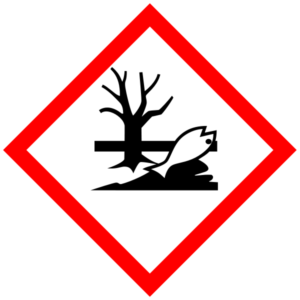 | Hazardous to the aquatic environment |